
Choosing the right mulch for seaside soil
Why coastal soil needs mulching more than most
If you garden within a few miles of the British coast, you will already know that your soil behaves differently from the loam described in generic gardening books. Salt-laden winds, free-draining sandy or shingly ground, and long dry spells in spring all conspire to strip moisture from the surface layers. Add the constant pressure of weeds such as groundsel, sow thistle and couch grass, and you have a plot that seems to work against you.
Mulching is the single most effective response. A good layer of organic material slows evaporation, keeps root zones cooler in summer, smothers annual weed seedlings and, over time, improves the structure of thin, hungry ground. The question is not whether to mulch on the coast, but which mulch suits seaside conditions best. Here is how the main options compare.
Composted bark: the reliable all-rounder
Composted bark is the workhorse of coastal mulching, and for good reason. It is relatively heavy, so it resists the gusty winds that lift lighter materials and blow them into next door's garden. It knits together into a mat that holds moisture well, and it breaks down slowly enough to give you a full season of cover before it needs topping up.
Look for bark that has been composted rather than fresh. Fresh bark is often high in tannins and can temporarily lock up nitrogen as it decomposes, which is the last thing you want on already poor seaside soil. A composted product is darker, crumbly and pleasant to handle, and it will start feeding the soil food web straight away.
Apply it at around 5–7cm deep, keeping it clear of stems and crowns so you do not encourage rot in wet winter weather. For shrubs such as sea buckthorn, escallonia and rosemary, a bark mulch is close to ideal.
Leafmould: free, light and brilliant for structure
Leafmould is the quiet hero of many seaside plots, particularly where the soil is sandy and struggles to hold onto anything. Well-rotted leafmould is dark, crumbly and full of the humus that thin coastal ground so badly lacks. Dig a little in and you will notice the difference within a season: water no longer runs straight through, and plants establish faster.
It is also free, which matters when you are mulching a large, windswept plot. Collect leaves in autumn — oak, beech and hornbeam are best because they break down slowly — store them in a wire bin or bin bags pierced with holes, and leave them for a year or two. The result is a mulch you can spread generously at 5cm deep.
The one drawback is weight. Leafmould is light and can be blown about on exposed sites. Spread it on a still day, water it in gently, and consider mixing it with a little composted bark to give it some body.
Seaweed and seaweed-based products
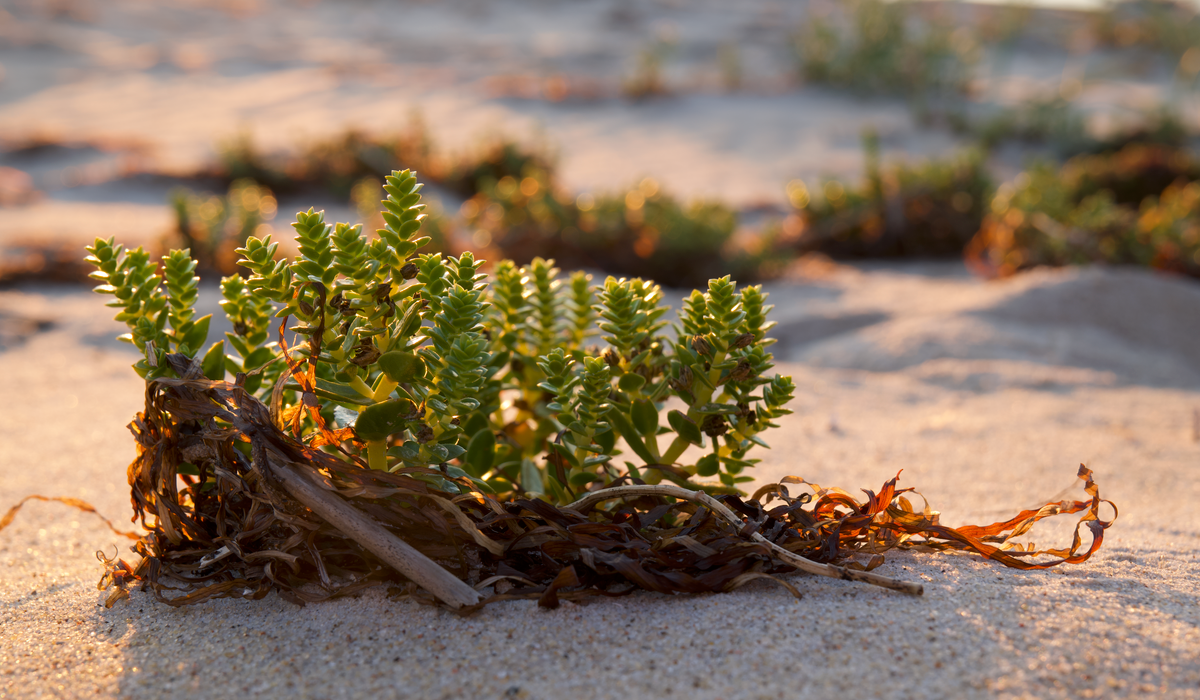
Seaweed is the mulch that coastal gardeners ask about most, and it is a genuinely good choice when used sensibly. Fresh seaweed gathered from the beach contains a wide range of trace elements, potassium and natural growth stimulants. Spread thinly and allowed to weather, it breaks down quickly and feeds the soil beautifully.
There are two important caveats. First, never take living seaweed from rocks — collect only what has washed up above the tide line, and check that your local council permits removal, as some areas restrict it. Second, fresh seaweed is salty, so rinse it in fresh water or leave it to be rained on for a few weeks before spreading it around salt-sensitive plants.
If you would rather not forage, commercially composted seaweed blends are excellent. They are usually mixed with bark or green waste, which gives them weight and makes them easier to spread. A 5cm layer around thrift, sea campion and other coastal natives works well.
Other options worth considering
- Composted green waste — widely available and good value, but quality varies. Choose a supplier with a good screening process, as plastic contamination can be a problem in cheap batches.
- Well-rotted manure — rich and moisture-retentive, best used on hungry roses and vegetables. Avoid fresh manure, which can burn roots and attract flies.
- Gravel or shingle — not a soil improver, but an excellent permanent surface mulch for Mediterranean-style planting and gravel gardens. It reflects heat and keeps the collar of drought-loving plants dry.
- Wool pellets — slow-release and slug-deterrent, though pricey for large areas and light enough to shift in strong winds.
Getting the timing and depth right
On the coast, the best time to mulch is early spring, once the soil has warmed but before the summer drought bites. A second thin top-up in early autumn helps protect roots through wet, windy winters.
Whatever you choose, aim for a layer of 5–7cm on bare soil, and never pile mulch against trunks, stems or crowns. Water the ground thoroughly beforehand if it is dry, because mulch locks in existing moisture rather than creating it. Keep a gap of a few centimetres around the base of each plant, and top up annually as the material settles and breaks down.
Get this right and your seaside soil will reward you: fewer weeds, happier plants and a garden that holds its own against the wind and the salt.
tag: Soil Care

Sophie Ainsworth Author
Gravel gardens suit coastal conditions when planted with drought-tolerant species. Learn how to prepare the ground and choose suitable plants.
YOU MAY ALSO LIKE
Creating a low-maintenance gravel garden by the coast
Aug 12
10Knowing when to cut back faded fronds keeps ferns healthy and tidy. Follow these simple guidelines for evergreen and deciduous varieties.
read more
Pruning and tidying ferns at the right time
Aug 7
10Hardy bulbs such as daffodils and alliums naturalise well in coastal gardens. Plant them in autumn for a reliable spring display.
read moreCoastal Gardens
-

ERRIC CATONA
Native grasses add movement and texture to coastal borders. These species tolerate wind, salt, and poor soil while supporting local wildlife.
May 19, 2016 at 5.12 pm
Reply
ERRIC CATONA
A well-planned windbreak reduces damage from salt-laden gales. Discover suitable trees, shrubs, and artificial screens for coastal plots.
May 19, 2016 at 5.12 pm
Reply -
ERRIC CATONA
Ferns prefer damp conditions, so coastal gardeners must water carefully during dry spells. These techniques help maintain humidity around the roots.
May 19, 2016 at 5.12 pm
Reply
Ferns
Your email address will not be published.