
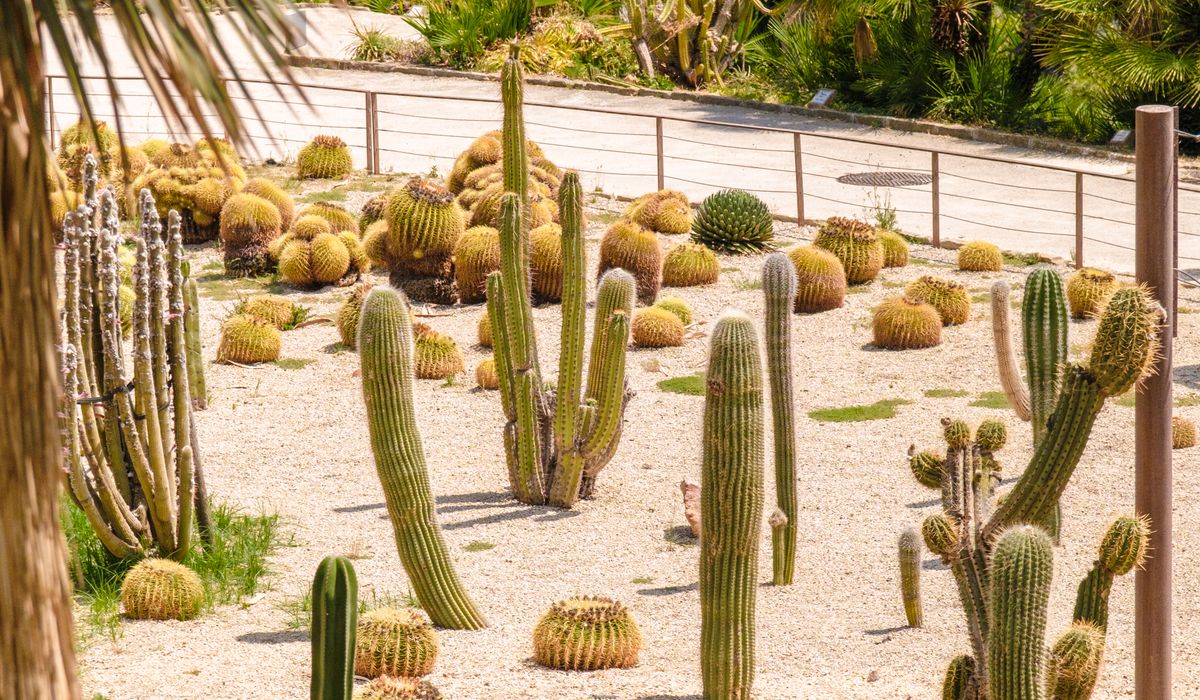
Designing a garden that copes with strong sea winds
Read the wind before you plant
Every coastal garden has its own weather. A few hundred metres inland the wind may be a nuisance; on an exposed headland it is the single fact that shapes everything you do. Salt carried in sea air burns leaf margins, drying gusts strip moisture from foliage faster than roots can replace it, and sand scours tender new shoots. The good news is that wind can be managed, and a coastal garden designed around it often looks better than a sheltered one.
Before you buy a single plant, spend time watching how the wind moves through your plot. Make a note of:
- Prevailing direction — in most of the UK it arrives from the south-west, but local headlands, cliffs and buildings can turn it completely.
- Funnels and gaps — the corner between a shed and a fence can double wind speed.
- Salt reach — plants within roughly 100 metres of the shore take the brunt, though gales can carry spray much further inland.
- Existing shelter — a mature hawthorn or a neighbour's hedge may already be doing half the work for you.
Why a solid wall makes things worse
The instinct is to build something tall and solid. Resist it. A close-boarded fence or a brick wall forces the wind up and over, and it comes crashing down on the other side with real violence. The sheltered strip immediately behind a solid barrier is surprisingly narrow, and beyond it you get turbulence that snaps stems and shreds leaves. In many exposed gardens a solid fence is worse than no barrier at all.
What you want is a barrier that filters wind rather than blocking it. Something in the region of 50 per cent porosity slows the airflow, bleeding its energy away, and creates a calm zone on the leeward side that extends roughly ten to fifteen times the barrier's height. Hazel hurdles, woven willow, slatted fencing and windbreak netting all do this well.
Low hedges, screens and the 50 per cent rule
A living hedge is the most handsome answer, and a low one is often enough. Aim for 1.2 to 1.5 metres in a small garden; that shelters around 15 metres of ground beyond it. Plant bare-root whips between November and March, spaced 45 to 60 centimetres apart in a double, staggered row, and water them well through their first two summers.
For a native mixed hedge, combine:
- Hawthorn and blackthorn — dense, thorny and supremely wind-fast.
- Wild privet — semi-evergreen, clips neatly, good on chalk.
- Gorse — fiercely tough, yellow flowers in spring, but give it room.
Prune lightly and often rather than hard, and avoid trimming in late summer so the hedge goes into winter with some growth intact. If you need shelter fast, put up a permeable screen first and plant the hedge in its lee; the screen can come down once the hedge has knitted together.
Native plants that shrug off salt and spray
Once the wind has been slowed, the planting palette opens up. Native coastal species are adapted to exactly these conditions, and many are genuinely beautiful. Silver and grey foliage reflects light and copes with salt; low domes and tussocks offer far less resistance than tall, sappy growth.
- Sea thrift (Armeria maritima) — tight pink pom-poms over neat cushions, happy in grit and full exposure.
- Sea campion (Silene uniflora) — white flowers, grey-green leaves, superb on a windy bank.
- Sea kale (Crambe maritima) — bold, crinkled blue-grey leaves that emerge purple in spring.
- Sea holly (Eryngium maritimum) — steely blue stems and teasel-like flowers; needs sharp drainage.
- Sea lavender (Limonium vulgare) — clouds of tiny mauve flowers in late summer, excellent for drying.
- Burnet rose (Rosa spinosissima) — low, suckering, creamy single roses followed by black hips.
- Sea buckthorn (Hippophae rhamnoides) — an outstanding windbreak for larger plots, but it suckers freely and needs both male and female plants for berries.
- Red fescue and sand sedge — native grasses that knit loose sand together and move beautifully in a breeze.
Soil, mulch and aftercare by the coast
Coastal soils are often thin, sandy and fast-draining, sometimes alkaline over shell sand and chalk, sometimes acid over granite. Whatever you have, the answer is the same: bulk up the organic content. Dig in well-rotted compost or leafmould, and add grit to the planting pockets of alpines and sea hollies so winter wet never sits around their crowns.
Mulch 5 to 8 centimetres deep with composted bark or gravel, keeping it clear of stems. Gravel is especially useful as it reduces evaporation and stops salt-laden soil splashing onto leaves. Water young plants deeply once a week through their first two summers rather than little and often, and hold back on high-nitrogen feeds, which produce soft growth that wind destroys. After a severe gale, rinse scorched foliage with a can of fresh water — it sounds fussy, but it genuinely helps.
Making it beautiful, not just bulletproof
A wind-hardy garden need not look like a bunker. Repeat a few strong plants rather than collecting dozens, and let silver foliage — sea kale, sea holly, sea campion — carry the scheme. Use gravel as a unifying surface, thread grasses through the borders so they shimmer in the breeze, and let gorse and hedges give the garden its bones. Build it as a series of small rooms, each one slightly more sheltered than the last, so you can sit out on all but the wildest days. Work with the wind and a coastal garden becomes one of the most evocative places to grow anything at all.
tag: Garden Design

Sophie Ainsworth Author
Choose nectar-rich flowers that tolerate salt winds to support bees, butterflies, and other pollinators in seaside locations throughout the growing season.
YOU MAY ALSO LIKE
Attracting bees and butterflies to coastal gardens
Sep 11
10Sandy coastal soil drains quickly and lacks nutrients. Learn how to add organic matter and choose plants that cope with these conditions.
read more
Improving sandy soil for seaside planting
Sep 9
10From protecting new growth against late gales to sowing hardy annuals, these spring jobs help coastal gardens start the season strongly.
read moreCoastal Gardens
-

ERRIC CATONA
Container-grown ferns need careful watering and shelter. Discover which varieties perform best in pots on exposed patios and balconies.
May 19, 2016 at 5.12 pm
Reply
ERRIC CATONA
Coastal alpines and tiny bulbs can transform a sunny rock garden. Learn how to build one that mimics their natural seaside home.
May 19, 2016 at 5.12 pm
Reply -
ERRIC CATONA
A mixed native hedge provides shelter, berries, and nesting sites. These coastal-tolerant species are ideal for garden boundaries near the sea.
May 19, 2016 at 5.12 pm
Reply
Ferns
Your email address will not be published.